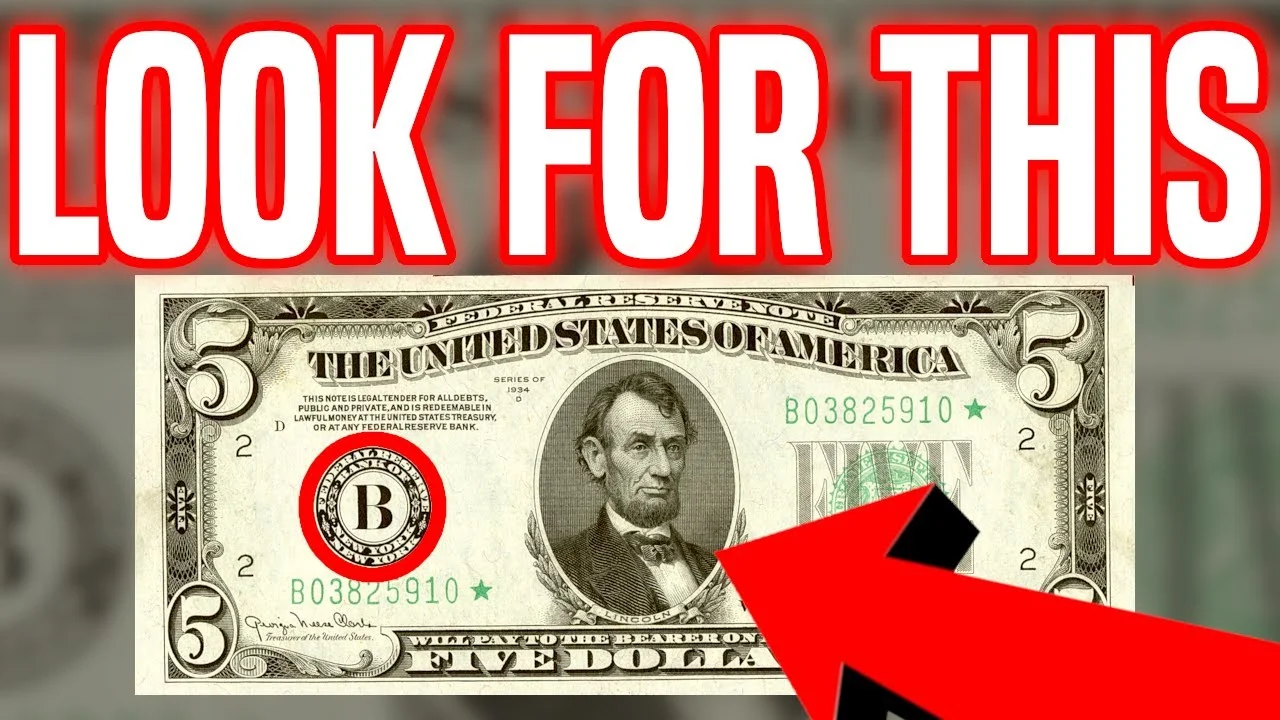
1995 $5 Bill:Most people carry cash, but never carefully examine what’s printed on their bills. But sometimes, a small printing error—barely noticeable at first glance—can transform a common piece of paper money into a rare and valuable collectible. One of the most interesting items quietly floating around in wallets and drawers is a 1995 $5 note with an inverted seal. This unusual mistake has caught the attention of collectors, and if you find one, you might be holding something worth far more than five dollars.
It’s a discovery that reminds us how even the most commonplaces can hold secrets. You never know—your pocket, purse, or old box of saved notes could hold a hidden treasure.
Why the 1995 $5 Bill Is Important
The 1995 series of U.S. $5 bills isn’t the rarest in circulation, but within that series, a small batch of notes appears to have been printed with misaligned or inverted Treasury seals. These errors were never intentional. Instead, they occurred during the high-speed printing process, where sheets move so quickly that even a small alignment error can cause the seal to be inverted.
For collectors, this type of printing error—called an “inverted seal error”—is one of the most exciting discoveries. It’s strange to look at, easy to verify, and very rare.
What is an upside-down Treasury Seal?
On the $5 bill, the green Treasury Seal should always face right, to the right of Abraham Lincoln’s portrait. When the seal is printed upside-down, the top and bottom are reversed, making the note immediately distinguishable to anyone familiar with currency.
This error is different from small smudges or normal printing shifts. An upside-down seal is a major error and almost never passes the inspection process at the Bureau of Engraving and Printing.
How to Check If Your 1995 $5 Bill Has the Rare Error
Finding one of these special bills isn’t difficult—you only need your eyes, a good light source, and a little patience. Here’s what to look for:
1. Confirm the Series Year
Check the small print near Lincoln’s portrait. It should read:
“Series 1995.”
Only bills from this series are reported to have the upside-down seal error.
2. Look at the Green Treasury Seal
This is the key detail. The seal should normally be upright with the scales at the top and key at the bottom.
If it is rotated 180 degrees, you may have found an inverted seal error.
3. Inspect the Serial Numbers
While the error usually doesn’t affect the serial numbers, make sure they:
-
Match on both sides
-
Use the correct font
-
Are not altered or damaged
Serial number anomalies alone rarely increase value, but combined with an inverted seal, they can boost interest.
4. Check for Misalignment
Not all upside-down seals are perfect flips. Some may be slightly rotated or shifted. These are still valuable but generally not as rare as a clean 180-degree inversion.
How much is a 1995 $5 note with a reverse seal worth?
Prices can vary greatly depending on condition, rarity, and collector demand. While the exact value depends on the market, error currency experts generally estimate:
Circulated note: $150 – $400
- Less circulated note: $400 – $900
- Crisp, uncirculated note: $1,000 or more
If the note has been well preserved, lays flat, and shows minimal wear, it may be worth even more.
Where to Sell or Authenticate a Bill
If you think you’ve found a 1995 $5 error bill, the next step is authentication. Good places include:
- Professional Currency Grading Services (PCGS Currency)
- Paper Money Guarantee (PMG)
- Local coin and currency dealers
- Large numismatic shows
After authentication, collectors often sell rare notes through:
- eBay
- Heritage Auctions
- Stack Bowers
- Private Collector Group
Professional grading is well worth the money, as authenticated error notes often fetch significantly higher prices.
Tips for Preserving Old or Valuable Bills
To preserve the value of your bill:
- Keep it in a currency-safe plastic sleeve
- Avoid bending or flattening it
- Keep it away from heat, moisture, and sunlight
- Never try to clean or iron it
Condition plays a big role in its value, so handle it with care.
Overall
Finding a rare 1995 $5 note with an inverted seal is like discovering a small piece of American printing history. It’s a reminder that even everyday objects can hold secrets—and sometimes those secrets can be surprisingly valuable. If you haven’t checked your wallet, now might be the right time. That forgotten $5 in your pocket could be a treasure in plain sight.
